ID: 61
Open
Listing ID: #61 has been added to your wishlist.
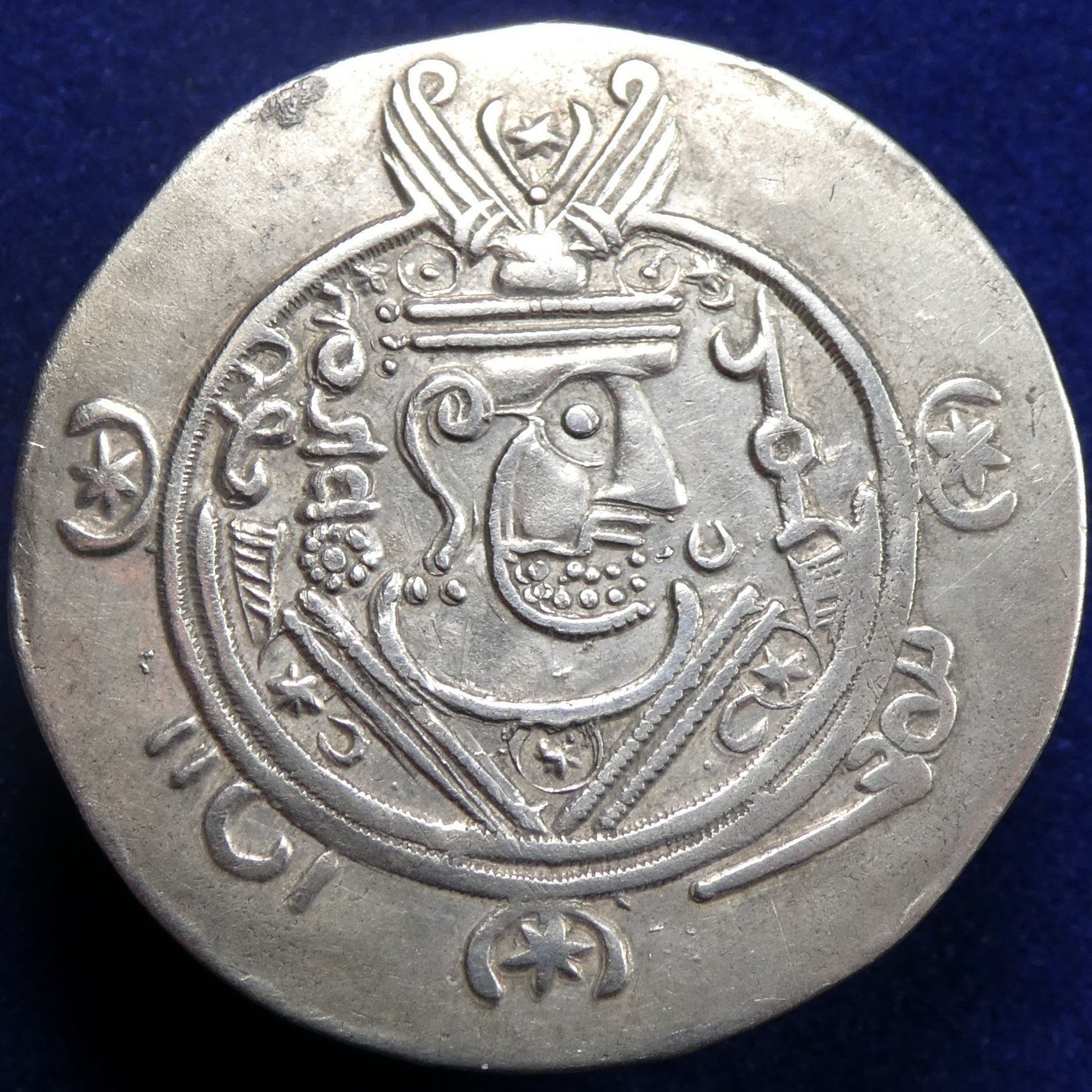
ISLAMIC, Arab-Sasanian. Governor: Umar. Hemidrachm Time of Abbasid Caliph of al-Mahdi, PYE 127 = AH 162 / AD 778–779. Tabaristan
Check the price and view more images.

CoinsTree participates in Catawiki affiliate program. When you click on links to different merchants on this site and take certain actions, such as making a purchase or signing up for a service, it may result in us earning a commission.
Description
slamic Coinage — ʿAbbasid Caliphate, Time of al-Mahdī
Caliph: al-Mahdī (AH 158–169 / AD 775–785)
Governor named: ʿUmar ibn al-ʿAlāʾ, Governor of Tabaristan (AH 154–163 / AD 771–780)
Denomination: AR Hemidrachm (Silver)
Mint: Tabaristan
Date: PYE 127 = AH 162 / AD 778–779
Weight: 1.90 g
Diameter: 23 mm
Reference: Album 56
________________________________________
Obverse
Crowned and draped Sasanian-style bust facing right.
Behind the head, Pahlavi legend:
AFZUT GDH
(“May his glory increase” or “May his kingship increase”).
In front of the bust, Arabic inscription naming the governor:
عمر
(ʿUmar, referring to ʿUmar ibn al-ʿAlāʾ).
Outer margin bears Pahlavi legends APD and NWKW, commonly interpreted as expressions of excellence or goodness.
________________________________________
Reverse
Sasanian fire altar on three steps, flanked by two attendants (mōbeds) standing facing forward.
Left field: Date in Pahlavi, PYE 127, corresponding to AH 162 / AD 778–779.
Right field: Mint name in Pahlavi, TPURSTAN (Tabaristan).
________________________________________
Historical Background
This silver hemidrachm vividly illustrates the persistence of Sasanian cultural and numismatic traditions in Tabaristan during the early ʿAbbasid period. Although struck under Caliph al-Mahdī, the coin retains the classical Sasanian iconography of crowned royal bust and Zoroastrian fire altar, together with Middle Persian (Pahlavi) inscriptions. Such continuity reflects the deep-rooted Iranian monetary practices that survived well into the Islamic era, particularly in geographically isolated regions such as Tabaristan along the southern Caspian coast.
The appearance of ʿUmar ibn al-ʿAlāʾ, the ʿAbbasid-appointed governor, demonstrates the region’s semi-autonomous status, where local administrations continued established minting traditions while formally acknowledging caliphal authority through Arabic inscriptions. These hemidrachms circulated mainly within northern Iran and represent a transitional monetary system that blends Sasanian religious imagery with Islamic political oversight. Coins of this type provide important evidence for the gradual cultural and administrative integration of Tabaristan into the ʿAbbasid Caliphate.